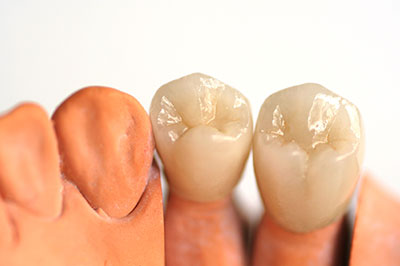
Once commonly referred to as, “porcelain jackets,” today’s all-ceramic crowns are fabricated from advanced generations of aesthetically appealing, lifelike materials affording strength and durability approaching that of tradition metal and porcelain fused to metal crowns (PFM).
When a tooth requires a full coverage restoration to rebuild its structural integrity and appearance, how good the crown will look and how well it will withstand the forces of oral function are major considerations in choosing the type of crown. In the past, only metal crowns or ones fabricated out of porcelain fused to an underlying substructure of metal offered the strength required to bite and chew without breaking. While porcelain fused to metal crowns to this day remain a popular choice for strong, attractive and long-lasting restorations to rebuild teeth that are damaged, decayed, misshapen, worn down, undersized, or have had a root canal procedure, there are some drawbacks. For one thing, the thin metal margin at the collar of a PFM crown may be visible at the gumline (especially in the presence of receding gums). Also, due to the presence of an underlying metal shell, porcelain fused to metal crowns do not come close to handling light in the same way as natural tooth structure or dental ceramics.
Advantages of Ceramic Crowns
While the trade off between appearance and strength used to mean that porcelain or all-ceramic crowns looked better but did not have the strength and durability of porcelain fused to metal crowns that is no longer the case. All-ceramic crowns are not only capable of producing incredibly lifelike results, but thanks to the range of materials available today, all-ceramic crowns are stronger and more reliable than ever before.
Some of the advantages of all-ceramic crowns include:
With the range of engineered dental ceramics available today, which material is selected for crown fabrication depends upon the location of the tooth, the stresses on that tooth and the esthetic requirements of the case. Certain all-ceramic crowns are more suited for back teeth, while others are able to fulfill the aesthetic requirements presented by a front tooth. Some of the all-ceramic crowns used today include Feldspathic porcelain crowns, Empress crowns, Procera crowns, Lava crowns, Zirconia crowns, and Emax crowns.


A ceramic crown is a full-coverage tooth restoration fabricated entirely from tooth-colored ceramic materials designed to restore form and function. Unlike metal-based crowns or porcelain-fused-to-metal restorations, all-ceramic crowns contain no metal substructure, which allows them to transmit light similarly to natural enamel. This optical similarity makes ceramic crowns especially useful in visible areas of the mouth where appearance matters.
Beyond esthetics, modern ceramics have been engineered for improved strength and wear resistance, narrowing the performance gap with older metal-containing options. Ceramics also reduce the chance of a dark margin at the gumline and avoid concerns about metal sensitivity. The choice of crown type is made by weighing appearance, strength needs and the clinical situation for each tooth.
A ceramic crown is typically recommended when remaining tooth structure is insufficient to support a filling or when a large portion of the tooth is compromised by decay, fracture or previous restorations. Crowns provide full coverage that protects weakened cusps, restores occlusal function and reestablishes proper contours for chewing. Teeth that have undergone root canal therapy or serve as abutments for bridges or implants often benefit from the additional reinforcement a crown provides.
Decisions to move from a filling or onlay to a crown are made on a case-by-case basis, taking into account the amount of healthy tooth left, bite forces, and cosmetic goals. Your dentist will evaluate structural needs along with how the restoration will blend with adjacent teeth to recommend the most appropriate solution. Conservative options are considered first, but long-term function and protection are prioritized when a crown is indicated.
Several ceramic formulations are used for crowns, each offering a different balance of strength and esthetics. Lithium disilicate is noted for its translucency and good strength, making it a popular choice for front and some premolar restorations. Zirconia provides exceptional durability and is often chosen for molars or patients with heavy bite forces; newer high-translucency zirconia variants aim to improve esthetics while retaining strength.
Other options, such as leucite-reinforced ceramics, prioritize a highly natural surface texture and color match for smile-focused cases. Material selection depends on the tooth’s location, functional demands, and the patient’s cosmetic priorities. Your dentist will explain the properties of each option and how they relate to longevity and appearance in your specific case.
Initial treatment begins with a comprehensive exam, digital imaging and shade selection to plan the restoration precisely, and impressions (digital or traditional) to capture tooth anatomy and bite relationships. Tooth preparation involves removing damaged or unsupported enamel and shaping the tooth to accommodate the crown while conserving as much healthy structure as possible. If needed, a temporary crown protects the prepared tooth while the final restoration is fabricated, and any sequence involving root canal therapy or implants is coordinated for optimal healing and fit.
Laboratory-fabricated crowns or in-office milled restorations are finished to match color and occlusion, then tried in to verify margins, contacts and esthetics before final cementation. After the crown is bonded, your dentist will confirm that your bite is comfortable and make any fine adjustments to ensure proper function. Follow-up visits allow the team to assess how the crown is integrating with surrounding tissues and to reinforce home care guidance.
At Brilliant Dental of Salem, we emphasize precise shade mapping and fit to deliver crowns that meet both cosmetic and functional goals, and we work closely with trusted laboratories or use modern milling workflows when appropriate. Communication about expectations and postoperative care is part of the process to support predictable results. Patients are encouraged to report any sensitivity, unusual sensations or concerns early so adjustments can be made promptly.
Caring for a ceramic crown is much like caring for natural teeth: maintain daily brushing with a fluoride toothpaste and interdental cleaning to remove plaque at the crown margin and adjacent gumline. Regular professional cleanings and checkups allow clinicians to monitor the crown’s condition, check margins for signs of leakage and address wear on opposing teeth. Good oral hygiene reduces the risk of decay developing at the crown-tooth interface, which is a common cause of failure.
Avoiding habits that place excessive stress on restorations, such as chewing ice, opening packages with your teeth or habitual grinding without a night guard, can protect the crown from chipping or fracture. If you have bruxism, your dentist may recommend a custom night guard to distribute forces more evenly. Promptly reporting sensitivity, looseness or changes in bite helps identify problems early and preserve the restoration.
Ceramic crowns can last many years when designed, fabricated and maintained properly; clinical longevity depends on factors such as material choice, the quality of tooth preparation and cementation, oral hygiene and the patient’s bite dynamics. Robust materials like zirconia tend to resist fracture and wear, especially in posterior teeth, while highly esthetic ceramics may require more careful management in high-stress situations. Proper occlusal adjustment at the time of placement reduces concentrated forces that can shorten a crown’s functional life.
Patient-specific factors also play a role: a history of bruxism, heavy chewing forces, or poor oral hygiene can increase the risk of complications and require additional protective measures. Regular dental visits to monitor the crown, surrounding tissues and opposing teeth make it possible to catch and correct issues before they lead to failure. With attentive care and appropriate material selection, many ceramic crowns provide durable, satisfactory results for a decade or longer.
Ceramic crowns are generally biocompatible and well tolerated by most patients because they are metal-free and do not release metal ions into surrounding tissues. For patients with known metal sensitivities or those who prefer an all-ceramic restoration for health or aesthetic reasons, ceramic crowns are often an excellent alternative to metal-containing options. The smooth ceramic surface also tends to be gentle on the adjacent gum tissue when margins are carefully placed and maintained.
Allergic reactions to dental ceramics are rare, but if you have a history of sensitivities it’s important to discuss this with your dentist so material choices can be tailored accordingly. Good periodontal health around the restoration and precise fit reduce irritation and contribute to long-term comfort. The dental team will screen for any relevant medical or allergy history and recommend the most appropriate ceramic formulation for your needs.
Yes, ceramic crowns can be used on molars, but material selection and design must account for the higher occlusal forces in the posterior region. High-strength ceramics such as modern zirconia are frequently recommended for molars because they provide superior fracture resistance compared with more translucent, esthetic ceramics. In some cases a layered approach is used, combining a strong zirconia core with a more esthetic outer ceramic to balance durability and appearance.
The restoration’s thickness, margin design and how the crown interfaces with opposing teeth are all critical to longevity in high-load areas. Your dentist will analyze bite forces, parafunctional habits and the opposing dentition to determine whether a ceramic crown is suitable or whether alternative designs are preferable. When properly planned and fabricated, ceramic crowns can perform reliably even in demanding chewing environments.
Ceramic crowns generally offer superior esthetics because they mimic the translucency and surface characteristics of natural enamel without a visible metal substructure, which eliminates the risk of a dark margin at the gumline. Porcelain-fused-to-metal crowns can deliver excellent strength due to their metal core, but they sometimes sacrifice lifelike optical properties, particularly at the margins or under thin ceramic veneering. For anterior teeth or highly visible restorations, all-ceramic crowns are often preferred for a more natural appearance.
Functionally, modern ceramics have improved considerably and can rival metal-based restorations in durability when the correct material is chosen for the tooth’s role. The decision between all-ceramic and porcelain-fused-to-metal restorations is based on esthetic priorities, strength requirements, gum tissue considerations and the clinical situation. Your dentist will discuss the tradeoffs and recommend the option that best meets your long-term functional and cosmetic goals.
Minor chips in a ceramic crown can sometimes be smoothed or repaired with composite resin in the dental office, depending on the location and extent of the damage. Larger fractures, compromised margins or crowns that have become loose usually require replacement to restore proper fit, seal and function. The choice to repair versus replace will depend on the crown’s structural integrity, esthetic considerations and whether the underlying tooth remains healthy.
If a crown becomes loose, it is important to see your dentist promptly to avoid decay or damage to the prepared tooth beneath. Re-cementation may be possible after cleaning and evaluation, but persistent looseness often indicates the need for a new restoration. Timely assessment helps preserve remaining tooth structure and avoids more extensive treatment in the future.
Ready to schedule your next dental appointment or have questions about our services?
Contacting Brilliant Dental of Salem is easy! Our friendly staff is available to assist you with scheduling appointments, answering inquiries about treatment options, and addressing any concerns you may have. Whether you prefer to give us a call, or fill out our convenient online contact form, we're here to help. Don't wait to take the first step towards achieving the smile of your dreams – reach out to us today and discover the difference personalized dental care can make.