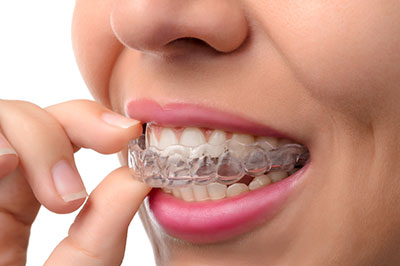
Invisalign® is a form of orthodontic treatment that works to correct many different types of malocclusions through the use of a series of clear plastic trays called aligners. As a more discreet, comfortable and completely removable method of care, Invisalign aligners provide an effective alternative to traditional orthodontic braces and metal wires for certain types of malocclusions.
Developed by a team of Stanford University students, the advanced 3D imaging, modeling, and aligner technology that defines the Invisalign system of care was introduced to the public in the year 2000. Since that time, it has become an extremely popular option in care.
Invisalign uses advanced 3-D computer imaging technology to formulate a sequence of custom-made clear aligners. The aligners, each of which is worn for a couple of weeks, incrementally move the teeth into place until the final desired corrections are reached. The advantage and appeal of the Invisalign method are that the clear aligners are more cosmetic, comfortable and convenient than other orthodontic appliances and operate with minimal interference to daily activities. Invisalign allows teens and adults to enjoy eating all of their favorite foods, and engage in sports without the fear of breaking their orthodontic appliances or sharp poking wires. Moreover, as the aligners are completely removable, tooth brushing and flossing are much easier as there is no need to clean in between any attached orthodontic brackets or wires.
*Invisalign is a registered trademark of Align Technology, Inc.


Invisalign® is a modern orthodontic system that uses a series of clear, custom-made thermoplastic aligners to move teeth incrementally. Each aligner is worn for a prescribed period to apply gentle, targeted forces that guide teeth toward their planned positions. The appliances are removable, so oral hygiene and eating routines remain largely unchanged.
Treatment is driven by a digitally created plan that maps each stage of tooth movement from the initial position to the desired outcome. Aligners are produced to the precise contours of your teeth so changes occur predictably and with minimal interruption to daily life. This combination of digital planning and staged aligners is what distinguishes Invisalign from traditional fixed appliances.
Many adults and teens with mild to moderate alignment issues are excellent candidates for Invisalign®. The system can address crowding, spacing, and certain bite concerns, though complex skeletal problems may still require traditional orthodontic approaches. A clinical evaluation and digital scan are required to determine whether aligner therapy can meet both your cosmetic and functional goals.
Suitability depends on oral health as well — untreated decay, active gum disease, or missing teeth can affect the plan and should be treated before starting. Compliance is also a factor because aligners must be worn consistently to achieve the planned movements. Your dentist will review medical and dental history, take images, and discuss realistic expectations during the consultation.
Treatment begins with a high-resolution digital scan or impression of your teeth, which creates a 3-D model for precise diagnosis and planning. Specialized software simulates the tooth-by-tooth movements and generates a step-by-step treatment roadmap used to fabricate the aligners. This digital workflow allows the dentist to preview expected results and make adjustments before aligner production.
The aligners themselves are manufactured from medical-grade thermoplastic to match the planned stages exactly, reducing variability in fit and force application. In-office tools such as intraoral scanners and radiographs help assess bite relationships and functional considerations alongside cosmetic objectives. Regular monitoring ensures the digital plan remains accurate as treatment progresses.
After planning and fabrication, treatment proceeds through a series of sequential aligners that you replace according to your dentist's schedule, usually every one to two weeks. Each new aligner advances the treatment slightly so that changes accumulate steadily over time. Periodic appointments allow the dentist to verify fit and make refinements if needed.
Treatment length varies with the complexity of the case, commonly ranging from several months to over a year for more involved movements. Factors such as patient compliance, initial alignment, and the extent of bite correction influence the timeline. Your care team will give a personalized estimate and update the schedule as progress is reviewed.
Proper care extends the life of your aligners and keeps them hygienic; rinse them each time you remove them and brush gently with a soft toothbrush using lukewarm water. Avoid hot water, abrasive toothpaste, or household cleaners that can warp or scratch the plastic. When not in use, always store aligners in their protective case to prevent damage or loss.
Maintain your regular oral hygiene routine by brushing and flossing before reinserting aligners to reduce the risk of staining and plaque buildup. If an aligner develops a persistent odor or discoloration, inform your dentist so they can advise on cleaning options or replacements. Follow any additional cleaning instructions provided by your care team to preserve fit and comfort.
Because aligners are removable, most people can continue to eat their regular diet without the restrictions typical of fixed braces. You remove the aligners to eat and drink anything other than water, then brush prior to reinserting them to protect enamel and aligner hygiene. This flexibility simplifies social and professional situations where appearance or comfort is a concern.
Speech may be slightly altered for a short time when you first begin wearing a new aligner, but most patients adapt within a few days as the mouth adjusts. Aligners are virtually transparent, allowing for a less noticeable appearance during treatment compared with metal brackets and wires. If you have questions about specific activities such as playing wind instruments or sports, your dentist can recommend temporary adjustments or protective options.
Check-ins are typically brief and focus on fit, progress, and any concerns about comfort or oral health. Your dentist will assess whether teeth are tracking according to the digital plan and determine if refinements or additional aligners are required. These visits are also opportunities to address hygiene, monitor gum health, and review proper wear instructions.
If teeth are not moving as expected, the care team may order refinements or modify the sequence to regain predictable progress. Attachments—small composite bumps bonded to teeth—may be placed or adjusted to assist certain movements, and these are removed after treatment. Clear communication with your provider ensures any necessary changes are implemented promptly to protect outcomes.
Mild soreness or pressure is common when moving to a new aligner because the appliance is applying force to shift teeth. Over-the-counter pain relievers, short-term use of cold packs, and soft foods for a day or two can help manage discomfort while teeth acclimate. Most patients describe the sensation as tolerable and brief given the incremental nature of the movements.
If an aligner causes persistent sharp pain, rubbing, or sore spots on soft tissues, contact your dental team for evaluation and adjustment. They can check the fit, trim irritating edges, or provide guidance on easing specific pressure points. Prompt attention prevents small issues from becoming obstacles to progress.
Retention is the next phase after active movement to maintain teeth in their new positions and reduce the likelihood of relapse. Your dentist will recommend a retainer protocol tailored to your case, which may include clear removable retainers or fixed bonded retainers for longer-term stability. Wearing retainers as instructed is the primary determinant of how long results last.
Follow-up visits allow the dentist to evaluate stability and adjust retention plans if minor settling occurs. Good oral hygiene and periodic dental exams support long-term outcomes by addressing changes that could influence tooth position over time. The goal of retention is to preserve both the cosmetic and functional improvements achieved through treatment.
To explore whether Invisalign® suits your needs, schedule an evaluation with our team where we review your oral health, take digital images, and discuss your smile goals. During the consultation we will explain the process, show a projected treatment preview when possible, and outline any preparatory care needed before starting therapy. This visit is an opportunity to ask specific questions about comfort, timeline, and functional objectives.
Brilliant Dental of Salem emphasizes individualized planning and patient comfort throughout treatment, and we coordinate follow-up care to support predictable outcomes. If you decide to proceed, the digital records collected at the consultation will be used to build your customized treatment roadmap. Contact the office to arrange a consultation and receive guidance tailored to your smile.
Ready to schedule your next dental appointment or have questions about our services?
Contacting Brilliant Dental of Salem is easy! Our friendly staff is available to assist you with scheduling appointments, answering inquiries about treatment options, and addressing any concerns you may have. Whether you prefer to give us a call, or fill out our convenient online contact form, we're here to help. Don't wait to take the first step towards achieving the smile of your dreams – reach out to us today and discover the difference personalized dental care can make.